


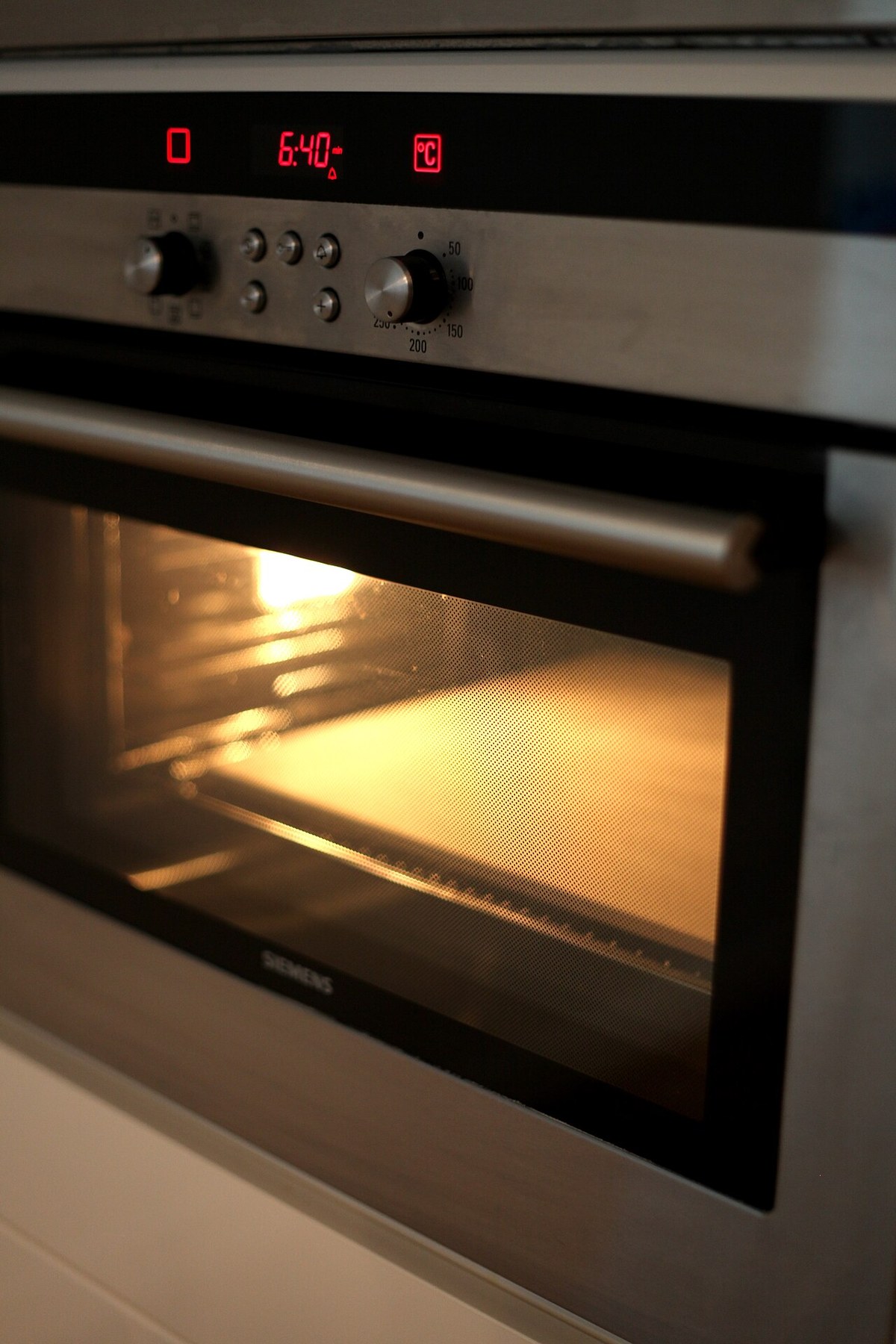
In a wood-fired oven, a fire heats thick brick or stone walls. These materials absorb heat and keep it after the fire goes out. Bread can bake using this stored heat. The baker needs to understand how the oven warms up and cools down.
For one method of bread baking, the baker removes the embers first. Embers are the hot pieces of wood left after the flames. The walls and floor remain hot. Pizza can also bake with a fire burning at the side, as the first photograph shows.
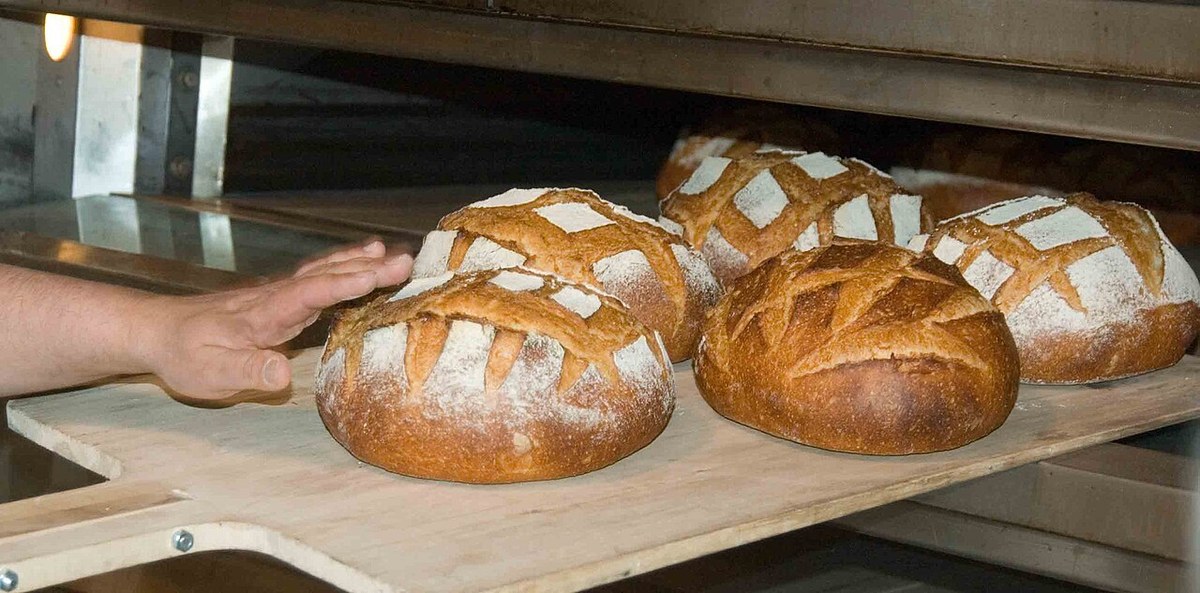
A bread peel is a tool with a long handle and a flat end. It helps the baker move dough into the oven and take bread out. The second photograph shows finished loaves on a peel. The long handle allows the baker to work from the opening.
During baking, the dough rises and becomes firm. A brown crust can form outside, while the inside stays softer. The result depends on the dough, the heat and the time in the oven. A wood fire alone does not guarantee a particular texture.
The stored heat slowly decreases between batches of bread. Bakers must account for this change when planning their work. Other foods can also use the remaining warmth. Knowing the oven and judging its heat were especially important before modern thermometers.























































