


The wood-fired masonry oven represents an unbroken chain of human ingenuity connecting fire, earth, and grain. Long before modern convection fans and digital thermostats, bakers relied entirely on an intuitive understanding of thermal mass and radiating heat. Burning seasoned hardwood inside the dome saturates hundreds of kilograms of brick with steady energy.
When internal temperatures climb past four hundred degrees Celsius, accumulated soot burns off completely, leaving the dome ceiling chalk-white—the unmistakable sign of a fully charged hearth. The coals are cleared or banked to the rear, and the baking deck is scoured clean with a damp mop of linen.
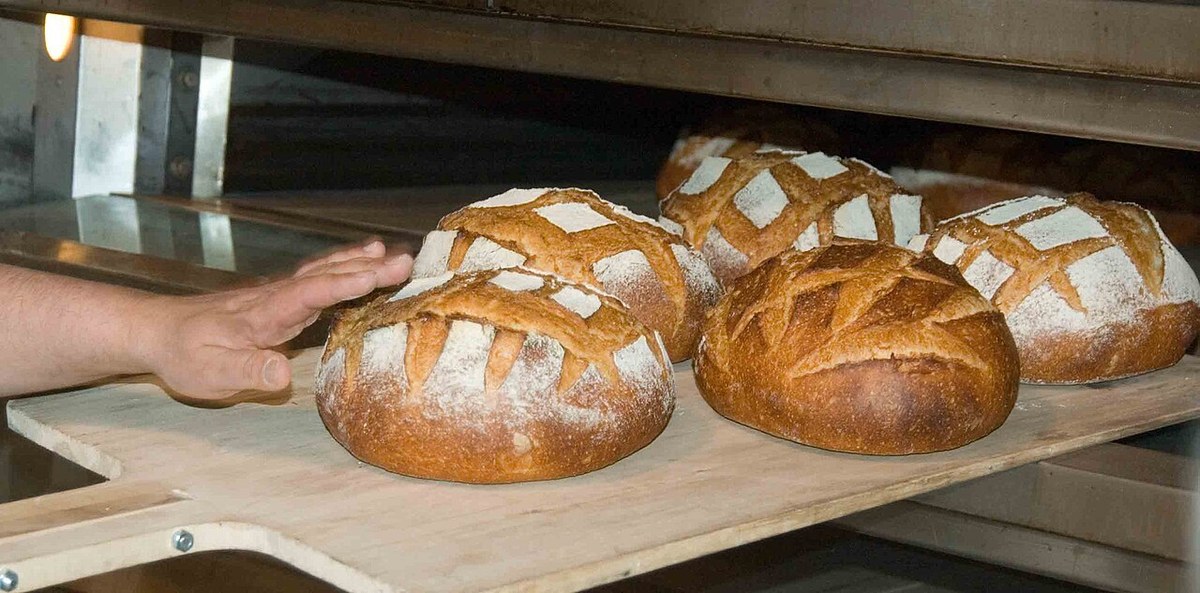
The dramatic transformation begins when the baker loads the hearth using a tapered wooden peel. The moment chilled, fermented dough contacts blazing refractory brick, 'oven spring' takes hold. Water within the dough flashes into steam, ballooning the delicate gluten network upward before the crumb sets.
Trapped steam inside the sealed chamber gelatinizes surface starches, fostering a glossy glaze and complex Maillard browning that yields roasted, nutty flavor compounds. The result is a loaf crowned with blisters, crisp shards of crust, and a deeply aerated interior crumb.
Even in an era of industrial precision, the masonry hearth remains the gold standard of artisan baking. Mastering it requires acute sensory perception—gauging ambient humidity, draft speeds, and the slow decay curve of stored heat to coax out the very soul of the grain.























































