


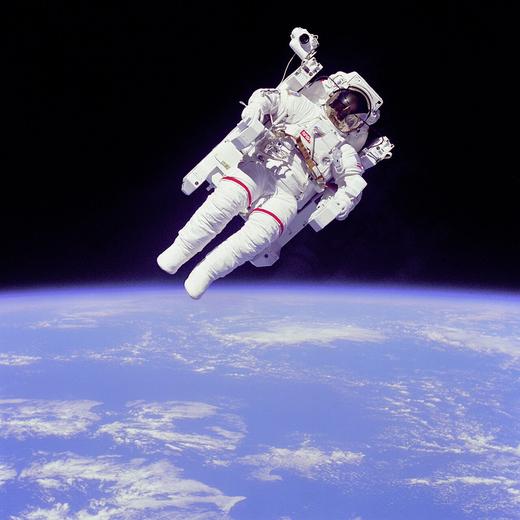
Suspended in low Earth orbit four hundred kilometers above the terrestrial sphere, the astronaut operates at the absolute frontier of human exploration and technological ingenuity. Peering through the panoramic optical silica windows of the orbital observatory cupola, the astronaut witnesses the sublime curvature of Earth illuminated against the impenetrable void of deep space. Traveling at orbital velocity exceeding twenty-seven thousand kilometers per hour, the International Space Station traverses sixteen sunrises and sunsets every single terrestrial day. Within the pressurized aluminum modules, continuous free-fall creates sustained microgravity, fundamentally transforming fluid dynamics, vestibular human perception, combustion behaviors, and everyday operational routines across the orbital complex.
Daily routines aboard an orbital laboratory represent an intense convergence of cutting-edge multidisciplinary science, technical station maintenance, and physiological preservation. Crew members execute complex experimental protocols spanning protein crystal growth, fluid capillary action, combustion physics, and cellular genomics under zero-gravity conditions. Because the prolonged absence of gravitational load induces accelerated musculoskeletal atrophy, bone demineralization, and cardiovascular deconditioning, astronauts adhere to non-negotiable two-hour daily physical conditioning regimens utilizing cycle ergometers, vibration-isolated treadmills, and advanced resistive exercise devices. Environmental control and life-support systems function as closed-loop ecological engines, chemically scrubbing carbon dioxide, generating breathable oxygen via electrolysis, and recycling nearly ninety-eight percent of atmospheric condensation and metabolic wastewater into potable drinking water.
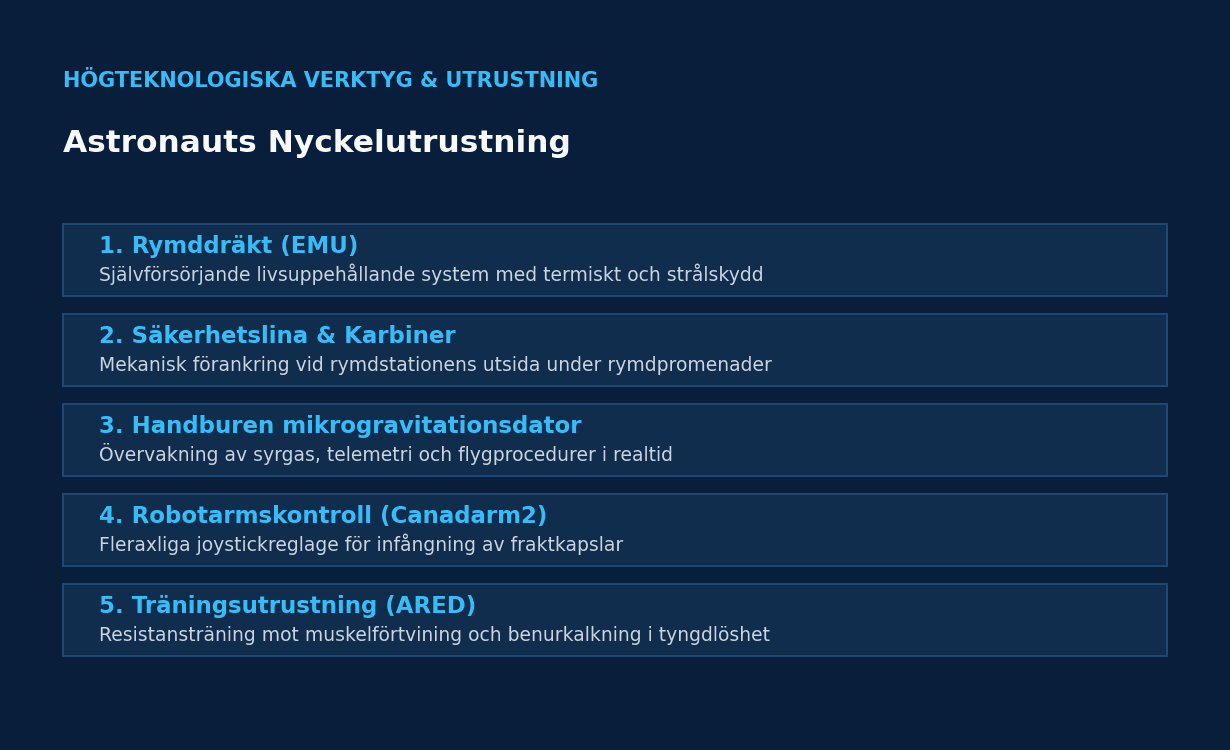
Extravehicular activities represent the most demanding operational phase of human spaceflight. Donning the Extravehicular Mobility Unit—a complex, multi-layered pressurized spacesuit functioning as an autonomous single-person spacecraft—requires hours of staged hyperoxic denitrogenation in the airlock to prevent decompression sickness. Outside the vehicle hatch, the astronaut confronts an unforgiving vacuum characterized by intense solar radiation, microscopic hypervelocity orbital debris, and extreme thermal gradients swinging between plus one hundred twenty degrees Celsius in direct sunlight and minus one hundred fifty degrees Celsius in orbital shadow. Tethered by braided steel safety lines, the spacewalker maneuvers using specialized torque-limiting pistol-grip power tools, foot restraints, and robotic arm articulation to execute delicate exterior structural repairs on high-voltage solar arrays and cryogenic cooling radiators in deep space.
Orbital station management mandates sophisticated operational discipline, continuous ground coordination, and real-time systems telemetry across planetary communication networks. Astronauts maintain constant multi-band satellite data communications with mission control centers distributed across Houston, Munich, Tsukuba, and Moscow. Crew members monitor thermal loops, attitude control thrusters, gyroscopic momentum wheels, environmental scrubbers, and automated docking interfaces handling visiting commercial cargo and crew capsules. Every anomalous system readout or electrical bus fluctuation demands immediate procedural triage guided by dense emergency flight manuals and coordinated ground controller consensus, ensuring station safety remains unimpaired throughout the demanding voyage.
The psychological demands of long-duration space missions require exceptional emotional composure, cultural adaptability, and interpersonal resilience among multinational crews. Confined within narrow pressurized volumes for six to twelve months, astronauts manage sensory deprivation, circadian rhythm disruptions, and communication latencies with family members on Earth. Before ever achieving orbit, candidates endure years of grueling preparation: mastering orbital mechanics and spacecraft avionics, surviving Arctic survival simulations, undergoing high-G centrifuge runs, and logging hundreds of training hours submerged in massive neutral buoyancy water tanks practicing full-scale spacewalk simulations.
When missions reach conclusion, the crew executes atmospheric reentry aboard an aerodynamic descent capsule. Decelerating from hypersonic velocities, the capsule encounters extreme frictional plasma temperatures exceeding two thousand degrees Celsius, successfully deflected by ablative heat shielding. Parachutes deploy in staged sequences, slowing the vehicle for touchdown in remote steppes or oceanic waters where tactical recovery forces stand by to assist the returning explorers. The astronaut embodies humanity's boundless quest for knowledge, international scientific cooperation, and the enduring aspiration to establish sustainable multi-planetary civilization on the Moon, Mars, and across the unexplored solar system.























































