


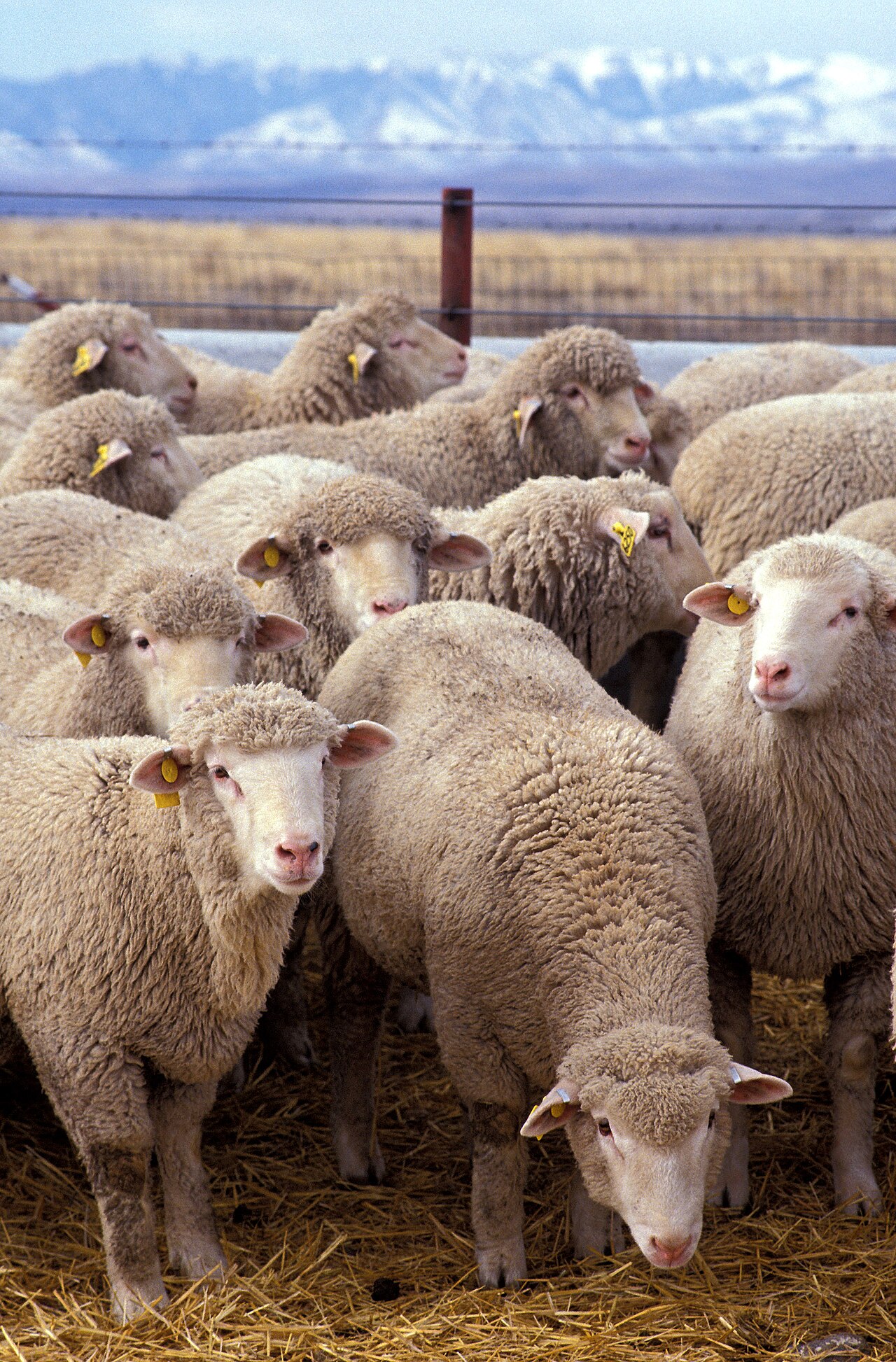
Sheep graze together on green hills, calling with soft bleats. People keep them for wool, milk, and meat. Different breeds suit different places and kinds of farming. Merino sheep are known for their fine wool. Other breeds live on cold or rocky hillsides. Sheep's milk is also used to make cheese. Their needs continue through all the seasons, even on a green pasture.
Wool traps air near the sheep's body and helps keep it warm. It contains a natural grease called lanolin. But a wool coat does not protect a sheep from every kind of weather. Many sheep need their wool cut regularly. This work is called shearing, and it needs a skilled person. Careless cutting can injure the skin. After shearing, the sheep may need protection from cold and rain. The right time depends on local conditions.
Sheep eat grass and other small plants. Their narrow mouths help them choose leaves close to the ground. Like cows, they have one stomach with four compartments. After swallowing food, they later bring some back to their mouths. They chew it again while resting. This is called chewing the cud. Tiny living things in the stomach help break down the plants. This process lets sheep get energy from tough plant material.
The flock is an important part of a sheep's life. Sheep often stay close together and follow one another. When frightened, they may gather into a tighter group. This does not remove every danger. A shepherd needs to move calmly around them. A trained dog may help move the flock. After a lamb is born, its mother licks it and learns its smell. Their calls also help them keep in contact. The shepherd checks both mother and lamb for problems.
Raising sheep means caring for the land as well as the flock. Grazing can control some plants, but too many sheep can damage the grass. Their feet can also press the soil down. The farmer needs to watch the plants, ground, and weather before moving them. Fresh water and suitable shelter remain important outdoors. A weak lamb or a sheep moving painfully may need help. A green field alone does not prove that the flock is healthy.























































