


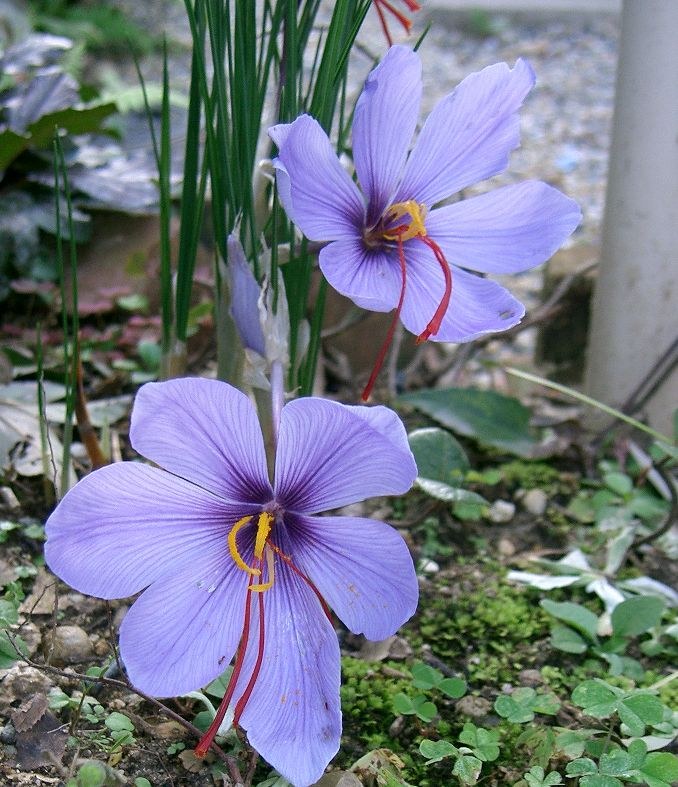
Saffron comes from the purple flower Crocus sativus. Inside each flower are three red threads called stigmas. These small parts become the spice. The purple petals do not go into it. Producing saffron therefore requires many flowers and careful work with their tiny centres.
Workers first gather the flowers and then separate the red threads. This work is done carefully by hand. The flowers need to remain in good condition during handling. Separating the parts takes time, even after the harvest itself is finished.
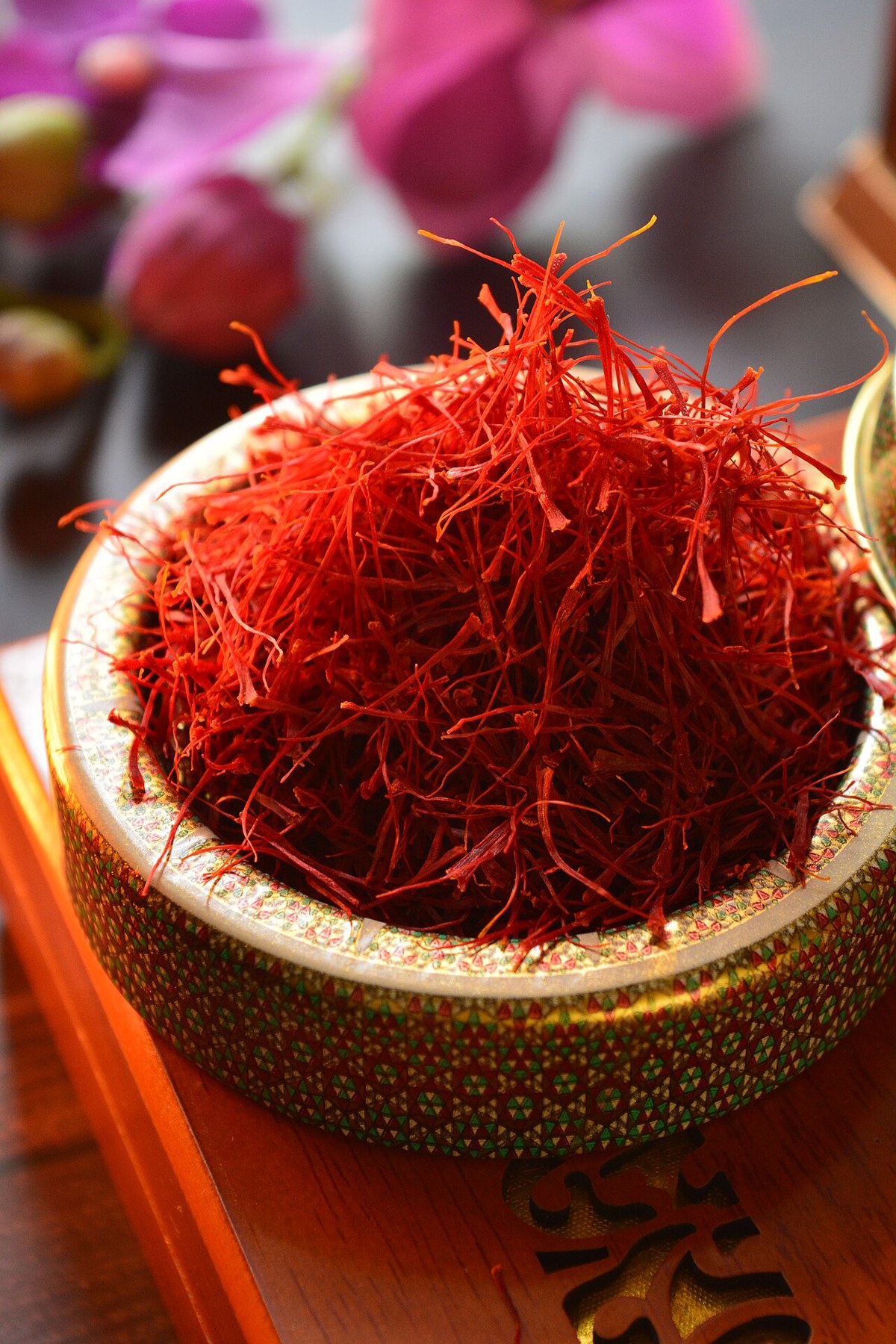
La Mancha in Spain is one region with protected saffron production. Its producers dry the stigmas with heat according to local product rules. Methods can differ in other places. The second photograph shows dried threads from Iran, another saffron-producing region.
The dry threads give food colour and aroma. In liquid, they release an intense yellow colour. Saffron is used in rice dishes such as risotto alla milanese, and in festive breads and cakes. Swedish Christmas buns are another example. The amount varies with the recipe.
Saffron can be sold as threads or powder. Whole threads still show the thin shape of the flower parts, while powder does not. Labels can give the product name and origin. These details help explain where a particular saffron product comes from and how it is sold.























































