


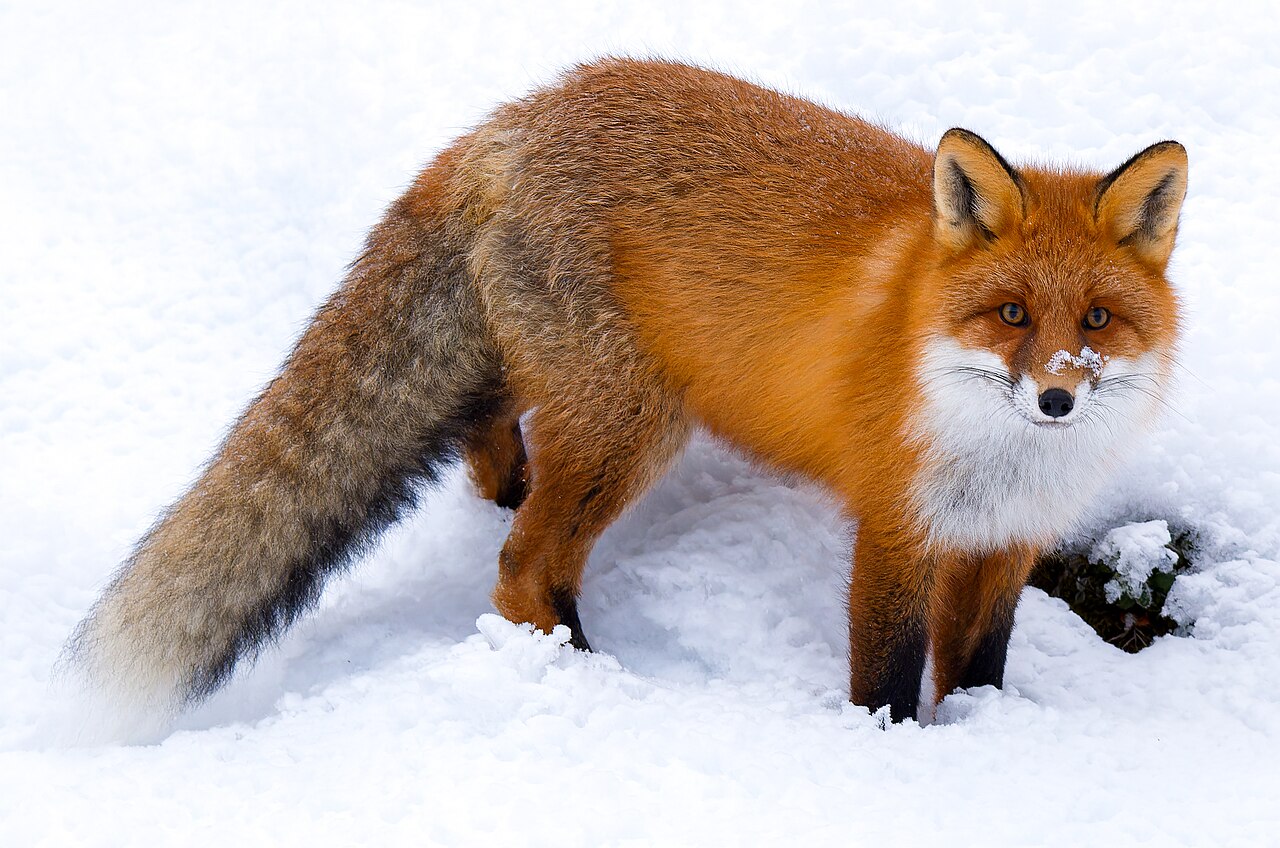
Trotting with fluid, frictionless biomechanics across frost-silvered lawns and suburban greenway margins, the red fox (Vulpes vulpes) exemplifies the quintessential apex survivor among Holarctic carnivorans. Displaying remarkable ecological plasticity, this medium-sized canid has transcended the boundary between wilderness tracts and humanized metropolises, establishing thriving synanthropic populations throughout Europe, North America, and parts of Asia. As nocturnal quietus envelops commuter towns, urban foxes emerge from secluded railway cuttings and overgrown allotments, utilizing residential gardens as a continuous mosaic of foraging corridors and subterranean denning sites.
The ethological triumph of the red fox rests upon exceptional neuromuscular coordination and multimodal sensory acuity. Its acoustic apparatus features large, independently mobile pinnae sensitive to low-frequency substrate vibrations, enabling the animal to perceive subterranean rodent vocalizations beneath forty centimeters of compacted snow or dense turf. Hunting voles and mice involves the celebrated "mousing jump" (mäuselsprung), a parabolic ballistic leap wherein the fox arcs over two meters through the air before diving forepaws-first onto concealed prey. Neurobiological research reveals that foxes utilize the Earth's geomagnetic field to calibrate the distance and trajectory of this leap, exhibiting significantly higher hunting success when pouncing in a north-northeast direction. In addition to geomagnetic alignment, the red fox possesses an acute tapetum lucidum layer behind its retinas, enabling superior low-light vision and motion detection when stalking across darkened municipal parklands where human eyesight fails completely.
As an opportunistic trophic generalist, the red fox demonstrates unrivaled nutritional adaptability across fragmented anthropogenic landscapes. While natural rural diets center upon microtine voles, lagomorphs, and ground-nesting gallinaceous birds, urban specimens exploit diverse anthropogenic trophic subsidies without developing physiological dependency. Stomach analyses reveal a dynamic dietary portfolio comprising earthworms (Lumbricus terrestris) gleaned from damp lawns, fallen orchard drupes, seasonal bramble fruits, discarded discarded anthropogenic foodstuffs, and domestic garden pests. This predatory versatility enables high population densities within suburban ecotones, often exceeding rural density metrics tenfold.
Ovine and canine folklore has long romanticized the fox's cunning, yet contemporary ethology confirms profound cognitive adaptability and complex social organization. Urban fox territories frequently accommodate multi-generational family groups anchored by a dominant breeding pair and subordinate non-breeding helper vixens that assist with cub rearing. Dens excavated beneath garden outbuildings or quiet woodland margins serve as natal sanctuaries. By early summer, juvenile cubs undergo rigorous social play, honing predatory agility, dominance hierarchies, and vocal repertoires—including the eerie nocturnal "vixen scream" and short raspy barks used for territorial demarcation.
Navigating the urban interface presents persistent hazards alongside nutritional abundance. Vehicle collisions represent the leading cause of mortality, while endemic infestations of sarcoptic mange (Sarcoptes scabiei) can decimate localized urban clans. Furthermore, secondary rodenticide poisoning from ingested anticoagulant-laden rodents remains a chronic environmental hazard. Responsible stewardship necessitates that urban residents appreciate foxes as functional bio-regulators of commensal rodent pests while refraining from direct hand-feeding that compromises their natural foraging self-sufficiency. Ecological monitoring reveals that urban foxes also serve as valuable sentinels for regional environmental health, their hair samples reflecting ambient heavy metal concentrations and environmental pollutant exposure across industrial urban perimeters.
Ultimately, the coexistence of the red fox within human suburban ecosystems offers a compelling narrative of wild resilience in the Anthropocene. Observing a fox's amber gaze beneath an incandescent sodium streetlamp reminds modern town dwellers that natural wildness is not a distant geographic frontier, but an adaptable living presence capable of flourishing alongside human civilization when granted respectful boundaries and protective corridors. In doing so, human communities acknowledge that shared landscapes need not erase wild biodiversity, fostering mutual resilience where ecological stewardship and metropolitan life enrich each other across generations. Such mindful balance preserves the ancient bond between urban humanity and wildlife.























































