


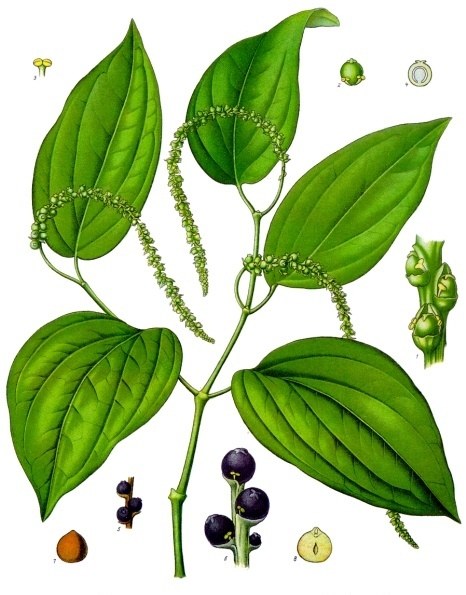
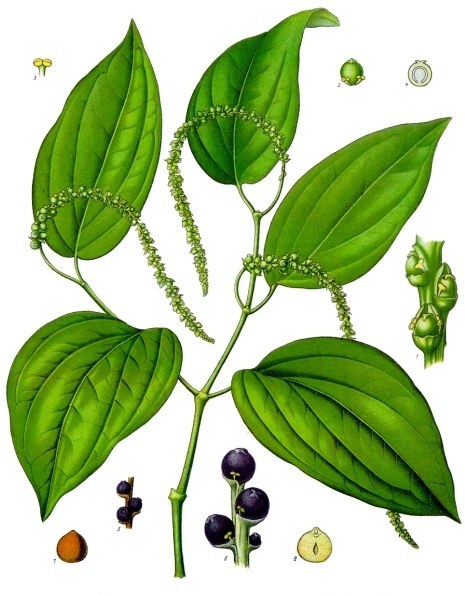
Black pepper comes from a climbing plant called Piper nigrum. It grows in tropical southern India, including Kerala. The plant needs support as it climbs. Its small fruits grow close together along thin stems. The first photograph shows them while they are still green.
After harvest, producers separate the fruits from their stems and dry them. The outer skin loses water, darkens and becomes wrinkled. The fruits also grow hard. This explains why fresh green pepper and dried black peppercorns look so different.
A substance called piperine gives pepper much of its strong, hot taste. It is already present in the plant; drying does not create it. Chillies get their heat from a different substance and come from different plants. Pepper also contributes aroma to food.
White pepper comes from the same plant as black pepper. Producers remove the outer skin of ripe fruits and dry the pale seed. Without the dark covering, the finished peppercorns have another colour. Different processing can therefore make two products from one plant.
Cooks use whole peppercorns or ground pepper. A pepper mill breaks the hard corns into small pieces and releases their smell. Pepper can season soups, meat, sauces and vegetables. The quantity depends on the dish and the person's taste, rather than one amount suitable for every meal.























































