


Stretching across 9,289 kilometers and spanning eight distinct time zones, the Trans-Siberian Railway represents the undisputed zenith of continental railway engineering. Originating at Moscow's Yaroslavsky terminus and terminating at the Pacific naval stronghold of Vladivostok, this colossal steel artery binds European Russia to the East Asian littoral. Conceived in the late nineteenth century by visionary finance minister Sergei Witte to secure geopolitical sovereignty, spur resource extraction, and integrate remote territories, the railway fundamentally transformed the Eurasian landmass from an impenetrable geographical barrier into a conduit of transcontinental trade and human migration.
The construction of the line, initiated in 1891 and officially completed in 1916, was an epic saga of perseverance against formidable environmental extremes. Tens of thousands of laborers, convicts, and engineers contended with the sub-zero ferocity of Siberian winters, where temperatures routinely plummeted below minus forty degrees Celsius, rendering ordinary iron brittle and shattering tool steel. Surveyors traversed the Siberian taiga, bridged peat bogs, and surmounted the engineering nightmare of continuous permafrost, which thawed into impassable quicksand during brief summer months. The ultimate masterwork was the Circum-Baikal loop, where engineers blasted thirty-nine bedrock tunnels through sheer granite precipices directly abutting the abyss of the world’s deepest freshwater lake.
Modern operations over this electrified double-track mainline rely on heavy-haul electric locomotives capable of pulling heavy freight convoys and multi-car passenger consists across extreme gradients. The rhythmic cadence of steel wheels traversing continuous welded rail defines a unique onboard culture that has endured for over a century. Within the insulated carriages, the social epicenter of each wagon is the traditional charcoal- or electric-fired titan, a water-heating samovar providing an inexhaustible stream of boiling water. Passengers gather to drink piping-hot tea served in faceted glasses cradled by ornamental nickel-plated podstakanniki, sharing provisions and life stories as European broadleaf forests yield to boundless Siberian birch stands and undulating steppe.
Station stops along the seven-day odyssey provide fascinating glimpses into the cultural mosaic of Eurasia. At provincial junction platforms like Omsk, Novosibirsk, Krasnoyarsk, and Irkutsk, travelers disembark into the biting taiga wind to purchase regional culinary specialties from local babushkas. Platters of steaming pirozhki stuffed with cabbage, salted wild forest mushrooms, and hot boiled potatoes dusted with fresh dill are traded alongside smoked omul, a delicate whitefish endemic exclusively to Lake Baikal. These brief interludes connect transcontinental travelers to the resilient human settlements thriving along the rail corridor.
The human core of Trans-Siberian operations resides with the carriage attendants, known as provodniki. Assigned in pairs to each wagon, these disciplined stewards maintain order, inspect tickets at international border crossings, vacuum carpets, and stoke the coal heaters during sub-zero blizzards. They foster a civil, egalitarian sanctuary where diplomats, backpackers, soldiers, and Siberian families coexist harmoniously over shared meals of dry sausage, pickled cucumbers, and warm tea.
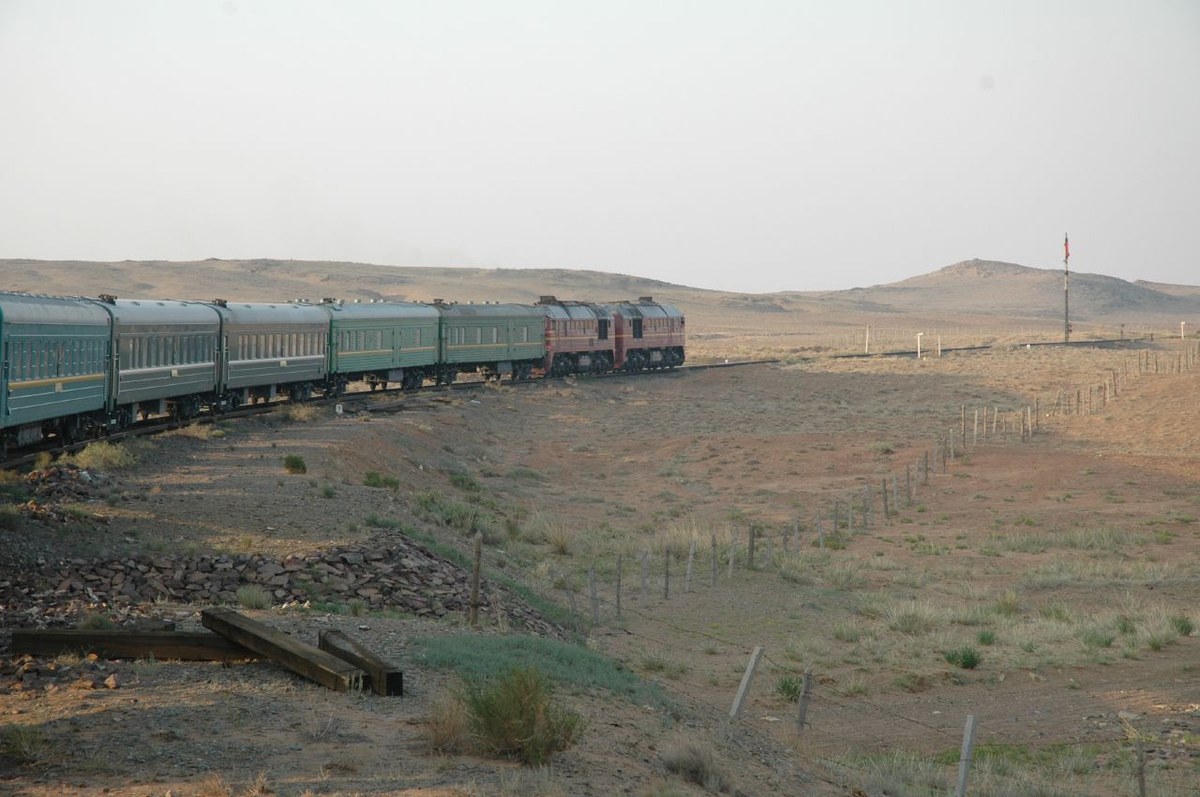
Technologically, the mainline has evolved from primitive wood-burning steam locomotives into a fully electrified conduit energized by 25 kV alternating current overhead catenary. Massive double-unit electric locomotives, such as the 2ES5K 'Yermak', employ regenerative braking to descend perilous mountain grades along Lake Baikal while hauling ten-thousand-ton unit trains laden with Kuznetsk coal, refined petroleum, and Siberian timber. In addition to the primary route to Vladivostok, major arterial branches—including the Trans-Mongolian line cutting through the Gobi Desert toward Beijing and the Trans-Manchurian link via Harbin—reinforce the railway's preeminence as the terrestrial backbone of East-West connectivity.
Beyond passenger transit, the Trans-Siberian corridor functions as a vital freight link connecting Asian manufacturing hubs with European logistical centers. Container consists hurtle westward carrying manufactured electronics, automotive assemblies, and raw minerals, bypassing lengthy maritime routes via the Suez Canal. By conquering the vastness of the Eurasian landmass, the Trans-Siberian remains a timeless monument to industrial civilization, proving that infrastructure can overcome geographical isolation and unite distant worlds.























































