


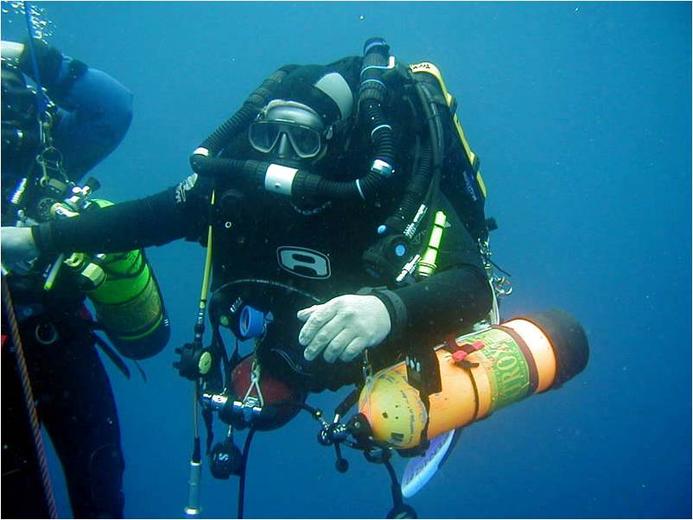
Aboard a specialized dynamic-positioning dive support vessel operating in treacherous offshore waters, the professional saturation diver inhabits an extreme physiological frontier that few human beings will ever witness firsthand. Rather than enduring repeated, hazardous compression and decompression cycles, saturation divers reside for up to twenty-eight consecutive days inside a hyperbaric living chamber complex pressurized to match the ambient hydrostatic pressures of the abyssal seabed—often exceeding thirty atmospheres, or three hundred meters of sea depth. Within this hermetically sealed habitat, divers breathe a specialized heliox mixture composed of helium and oxygen. Because helium's low molecular density distorts acoustic vocal resonance into a high-pitched timbre, communication requires real-time digital unscrambling software, while helium's high thermal conductivity demands continuous environmental heating to prevent hypothermia inside the living habitat.
Operational deployment begins when the dive team transitions from the hyperbaric living habitat into a submersible steel diving bell clamped to the transfer lock. The bell descends through the turbulent ocean water column via heavy heave-compensated winches, guided by reinforced umbilical tethers. Surface life-support supervisors and hyperbaric technicians monitor real-time gas telemetry, partial pressures of oxygen, core body temperatures, and video surveillance across redundant digital channels. At depth, internal bell pressure exactly equals external hydrostatic water pressure, allowing the dive team to open the bottom lock-out hatch into the pitch-black, freezing oceanic abyss without water flooding the chamber interior.
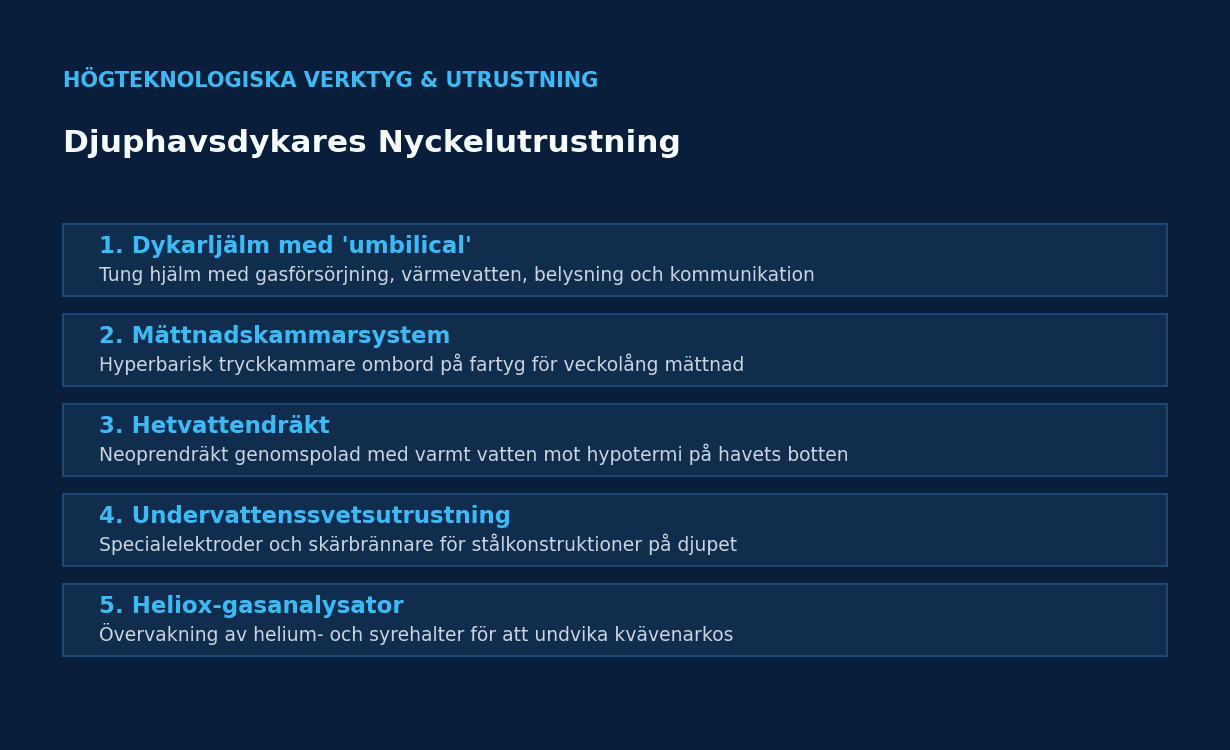
Exiting the diving bell onto the seafloor, the diver is supported entirely by a composite umbilical cable—a vital lifeline delivering breathing heliox, high-voltage lighting power, bidirectional communications, depth sensors, and a closed-circuit circulation of hot water. Because abyssal seawater hovers just above freezing at four degrees Celsius, pressurized hot water pumped from surface boilers continuously circulates through micro-tubing embedded within the diver's neoprene exposure suit, maintaining core physiological homeostasis against rapid thermal conduction. Wearing a pressurized titanium-reinforced dive helmet equipped with ultra-bright LED clusters and high-definition video cameras, the diver navigates seabed topography with zero natural illumination, contending with strong deep-ocean currents and shifting silt layers.
Subsea operations require advanced industrial tradecraft executed under severe physical constraints. Saturation divers perform precision dry-habitat hyperbaric welding, high-pressure hydraulic bolt tensioning, structural nondestructive ultrasonic testing, and manifold installations on offshore energy wellheads and transatlantic fiber-optic telecommunications backbones. Manipulating heavy rigging, hydraulic impact wrenches, and oxy-arc burning torches while counteracting buoyancy dynamics requires extraordinary physical stamina, mechanical aptitude, and absolute emotional composure. The working environment allows no tolerance for panic or distraction; divers operate under strict buddy systems, continuously cross-checking umbilical tether lines, manifold valves, and gas supplies against mechanical entanglement on complex subsea jackets and structural framing.
Upon completing operational rotations, the decompression protocol represents a critical, multi-day physiological ordeal governed by precise hyperbaric medicine schedules. Because divers' fatty tissues and bloodstreams have become completely saturated with dissolved helium gas, returning safely to atmospheric surface pressure requires five to seven full days of continuous, minute decompression inside the hyperbaric chamber. Depressurizing too rapidly would cause helium to precipitate out of solution as gas bubbles, triggering catastrophic decompression sickness, arterial gas embolisms, and neurological paralysis. Doctors and life-support engineers adjust pressure increments by mere fractions of a bar per hour while monitoring crew vitals around the clock.
Statistically, fewer individuals have worked in deep saturation diving than have journeyed into outer space. The profession demands an exceptional synthesis of extreme physical resilience, specialized hyperbaric engineering knowledge, and unflinching psychological discipline. Through their dangerous labor on the ocean floor, saturation divers maintain the submerged nervous system of international telecommunications, secure offshore energy supplies, and demonstrate humanity's remarkable capacity to work productively within the most hostile aquatic environments on our planet across all seasons.























































