


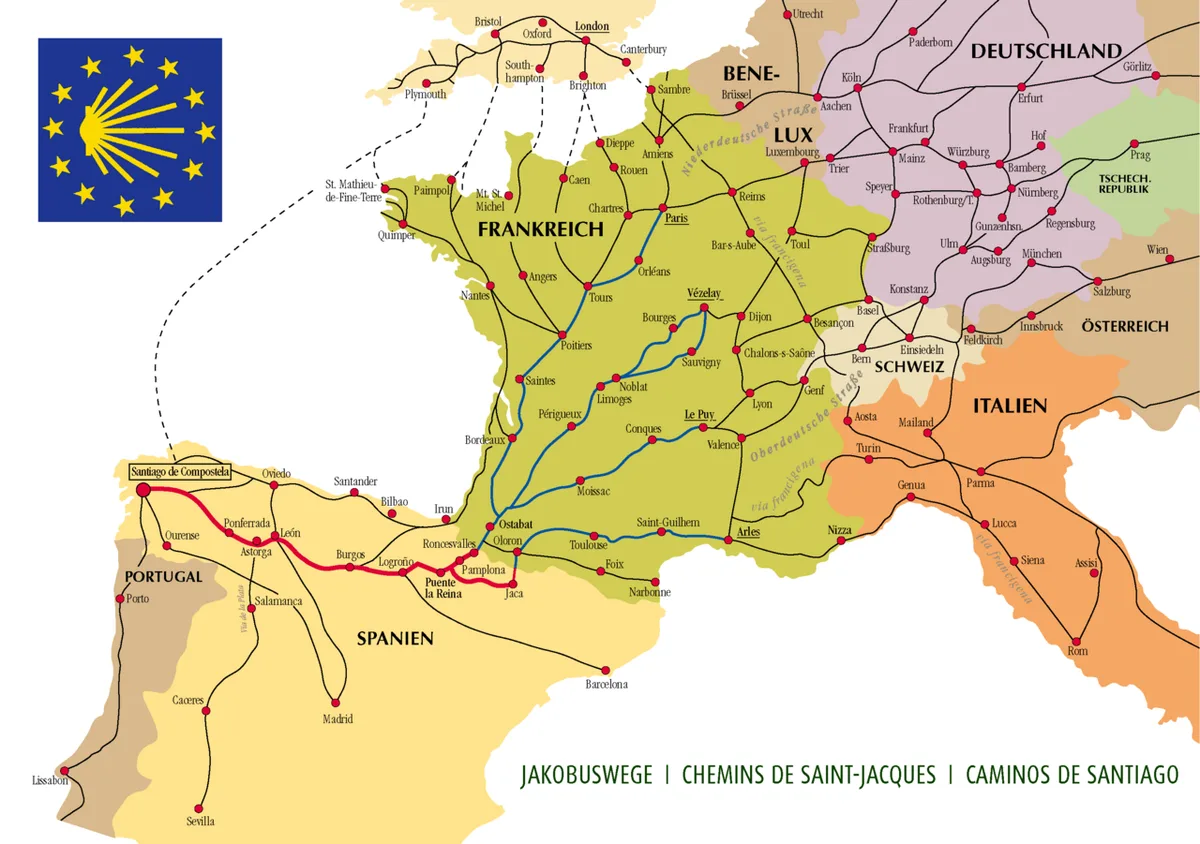
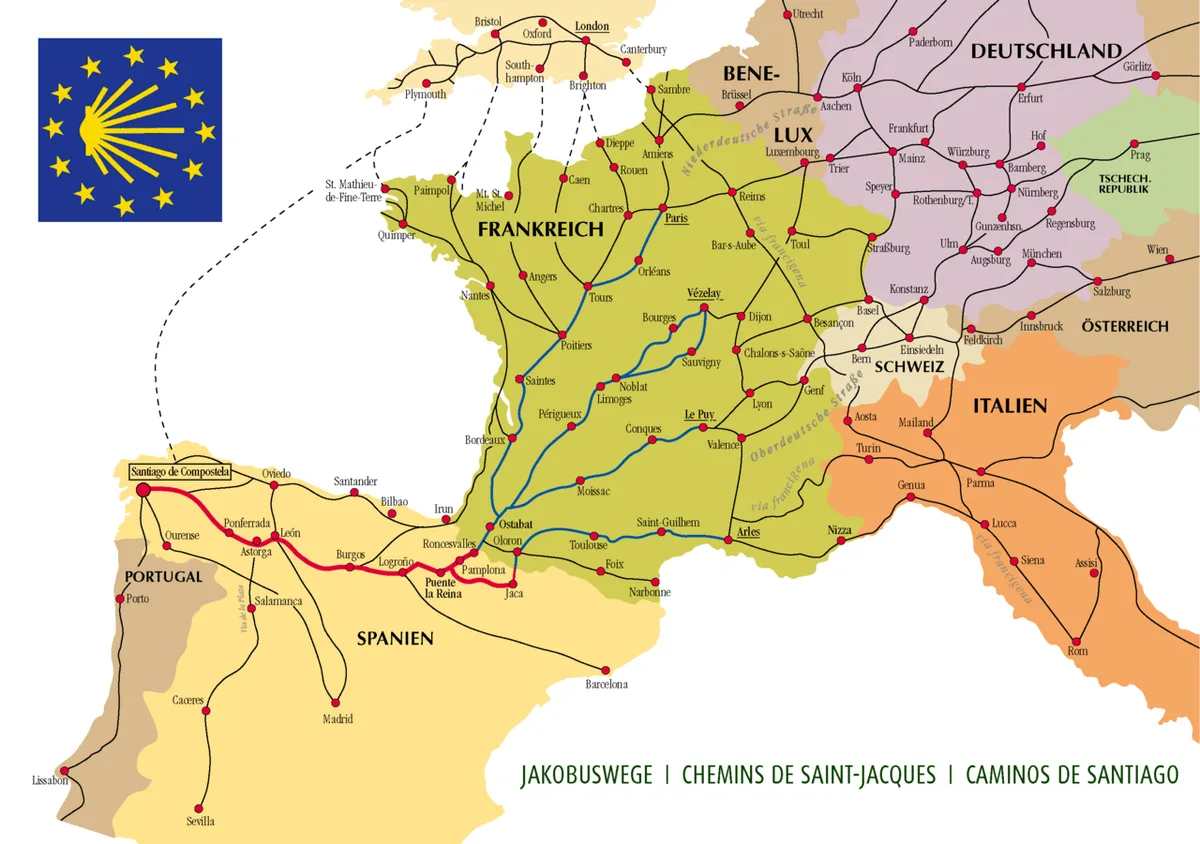
Originating in the ninth century following the purported discovery of the relics of Saint James the Apostle, the Camino de Santiago evolved into one of medieval Christendom's three great pilgrimage destinations alongside Rome and Jerusalem. Traversed by millions across twelve centuries, the network—encompassing the Camino Francés, the Coastal Del Norte, and the Portuguese route—functions today as a vibrant intersection of historical heritage, physical endurance, and shared humanity.
The route's signature insignia, the scallop shell (vieira), mirrors the topography of the pilgrimage: its grooved lines converge from multiple points into a single apex, symbolizing pilgrims embarking from diverse European homelands toward a common sanctuary. Walking the Meseta central plains under relentless sun tests mental fortitude, while the granite villages, hollowed cart tracks, and persistent drizzle (orballo) of Galicia provide a soothing, tactile transition toward the Atlantic edge of Europe. Evenings spent in communal albergues over shared bread and local wine dismantle national barriers, fostering unexpected intimacies among strangers.
The climax arrives at Santiago's Plaza del Obradoiro, where boots scuffed with red clay come to a halt before the Baroque façade enclosing medieval Romanesque stonework. Inside the cathedral, beneath the masterwork Portal of Glory, pilgrims embrace the gilded statue of Saint James and watch the 80-kilogram Botafumeiro censer swing through the transept at breathtaking speed, billowing smoke through the nave. For most, reaching the destination marks not an end, but an existential beginning.























































