


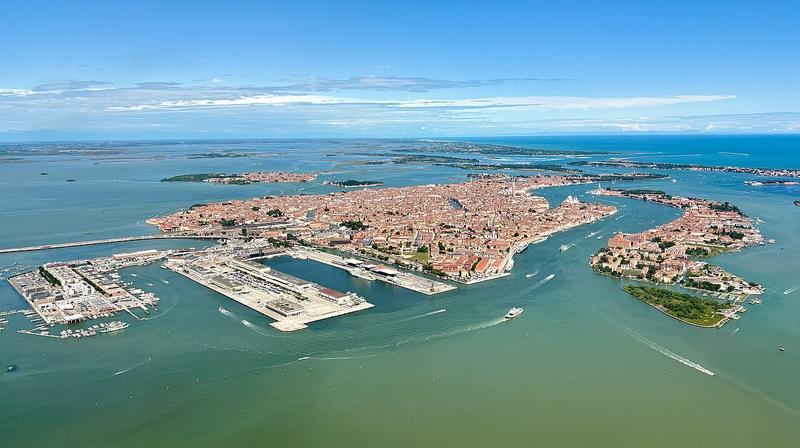
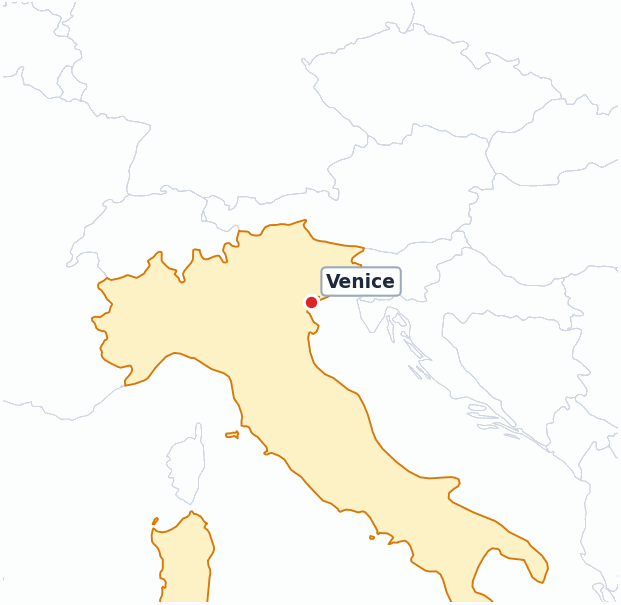
Venice stands in a lagoon in north-east Italy. A lagoon is an area of water close to the sea. In the historic centre, people walk or travel by boat. There are gondolas, motorboats and public water buses. The Grand Canal passes between large buildings. Many palaces have stone arches and marble fronts. St Mark’s Basilica stands in a large square. Inside, small pieces of coloured material form golden pictures called mosaics.
For many centuries, Venice was an independent republic with many ships. Its merchants brought cloth and spices from distant ports. The buildings show some of these links with other cultures. Narrow streets called calli lead to squares called campi. Bridges connect paths across the canals. The Rialto Bridge crosses the Grand Canal. Water is therefore part of daily travel as well as the city’s history. It helps explain how the streets, houses and public spaces fit together.























































