


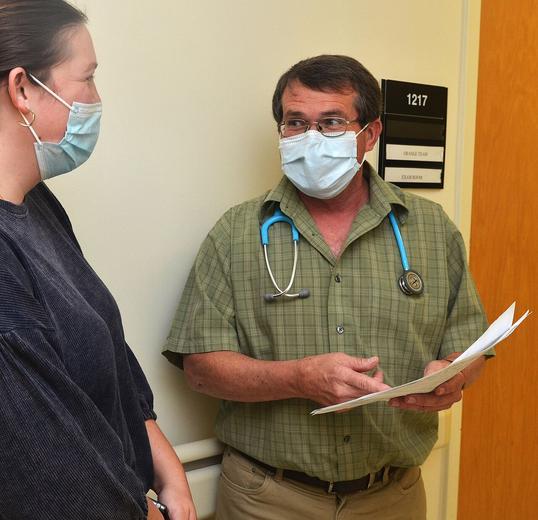
A family doctor sees patients of different ages. Children, adults and older people may come to the clinic. The doctor asks how they feel and listens to their answers. A patient's daily life can also help explain a health problem. The doctor may notice how the person walks or breathes. These observations give clues, but they do not always explain the cause of an illness.

With a stethoscope, the doctor listens to the heart and lungs. This tool makes sounds inside the body easier to hear. Other tools help check blood pressure or look at the throat. Sometimes the doctor needs blood tests or images of the body to learn more. The doctor and patient then discuss possible care and the next steps. If needed, another doctor with special knowledge can help.























































