


Before the dawn of the railway era, terrestrial transportation remained tethered to biological muscle and organic limits. Overland freight and passenger transit relied on heavy draft horses hauling wooden wagons across rutted turnpikes, where torrential rains frequently reduced thoroughfares to impassable morasses. Moving bulk commodities such as timber, quarried stone, and coal required canal barges that drifted at a leisurely pace of three miles per hour. As the Industrial Revolution accelerated across Great Britain, factories demanded a revolutionary logistics infrastructure capable of transporting fuel and finished manufactured goods rapidly, reliably, and independently of seasonal droughts or winter freezes.
In October 1829, the directors of the nascent Liverpool and Manchester Railway confronted a critical engineering crossroad: should they power their double-track inter-city railway using stationary steam engines operating continuous cable haulage systems, or gamble on independent mobile steam locomotives? To resolve the dilemma, the board staged the legendary Rainhill Trials, a high-stakes open engineering competition offering a substantial purse of five hundred pounds and lucrative manufacturing contracts. Contenders were required to haul three times their own weight along a level one-and-a-half-mile section of track for seventy miles, maintaining an average velocity of at least ten miles per hour without emitting excessive nuisance smoke.
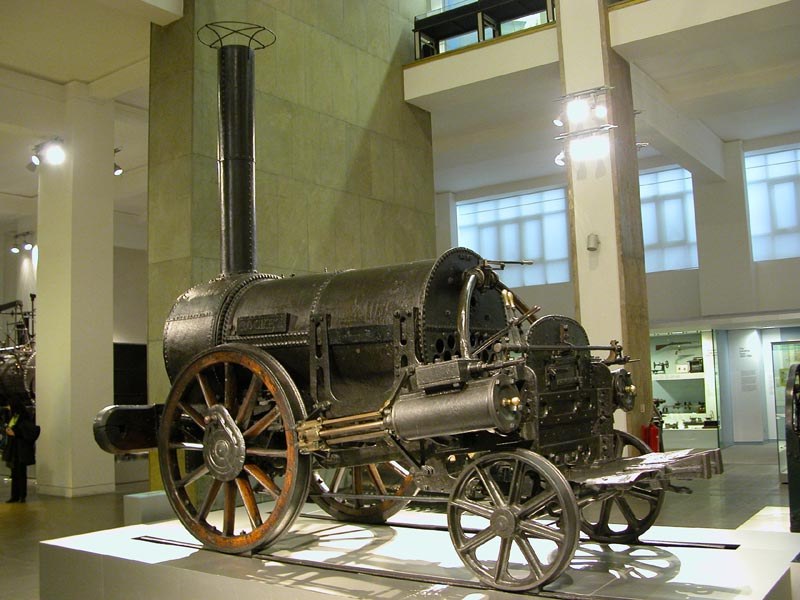
Five machines entered the trial, but the undeniable victor was 'Rocket,' engineered by George Stephenson and his brilliant son Robert. Clad in bright yellow livery with polished brass fittings, Rocket represented a paradigm shift in thermodynamic and mechanical design. While rival entries suffered repeated mechanical breakdowns, cracked cylinders, or chronic thermal inefficiency, Rocket completed the demanding trials without significant mechanical failure. Under light loads, the locomotive astonished spectators by accelerating to an unprecedented velocity of twenty-nine miles per hour, shattering contemporary medical anxieties that high-speed travel would asphyxiate the human respiratory system.
The cornerstone of Rocket’s triumph was its revolutionary multi-tubular boiler, an innovation suggested by railway treasurer Henry Booth. Rather than relying on a single large fire flue, Robert Stephenson routed twenty-five small copper tubes through the water chamber. This configuration vastly expanded the thermal surface area, permitting rapid heat conduction from hot furnace gases to the surrounding water. Furthermore, the Stephensons integrated a blast pipe that vented exhaust steam directly into the vertical smoke stack. The resulting vacuum drew a continuous, powerful draft of fresh oxygen through the coal grate, automatically synchronizing combustion intensity with locomotive speed and steam consumption.
Equally significant was the running gear architecture. Moving away from earlier vertical cylinder arrangements that subjected tracks to destructive hammer-blow vibrations, the Stephensons positioned the cylinders at a dynamic angle connected directly to the front driving wheels via forged steel piston rods. This layout delivered superior traction, balanced mechanical stresses, and enhanced lateral track stability. Rocket established the foundational engineering template for steam locomotives that would endure across global networks for more than a century.
When the Liverpool and Manchester Railway opened for commercial traffic in September 1830, Rocket stood at the vanguard of the modern industrial world. The railway demonstrated that mobile steam power could annihilate spatial distance, synchronize continental trade, and catalyze unprecedented economic expansion. By proving that mechanical traction was faster, cheaper, and vastly superior to horse transport, Stephenson’s Rocket initiated the global railway mania that transformed geography, urban settlement, and human civilization forever. The construction of the Liverpool and Manchester line also represented a triumph of civil engineering spearheaded by George Stephenson. Engineers conquered the treacherous peat bog of Chat Moss by floating the railway embankment on a woven mattress of heather and branches, excavated the sheer sandstone chasm of the Olive Mount cutting, and erected the nine-arch masonry Sankey Viaduct. Furthermore, the operational success of inter-city railways necessitated the nationwide standardization of time, superseding localized solar reckoning with synchronized railway time that eventually laid the foundation for modern global time zones.























































