


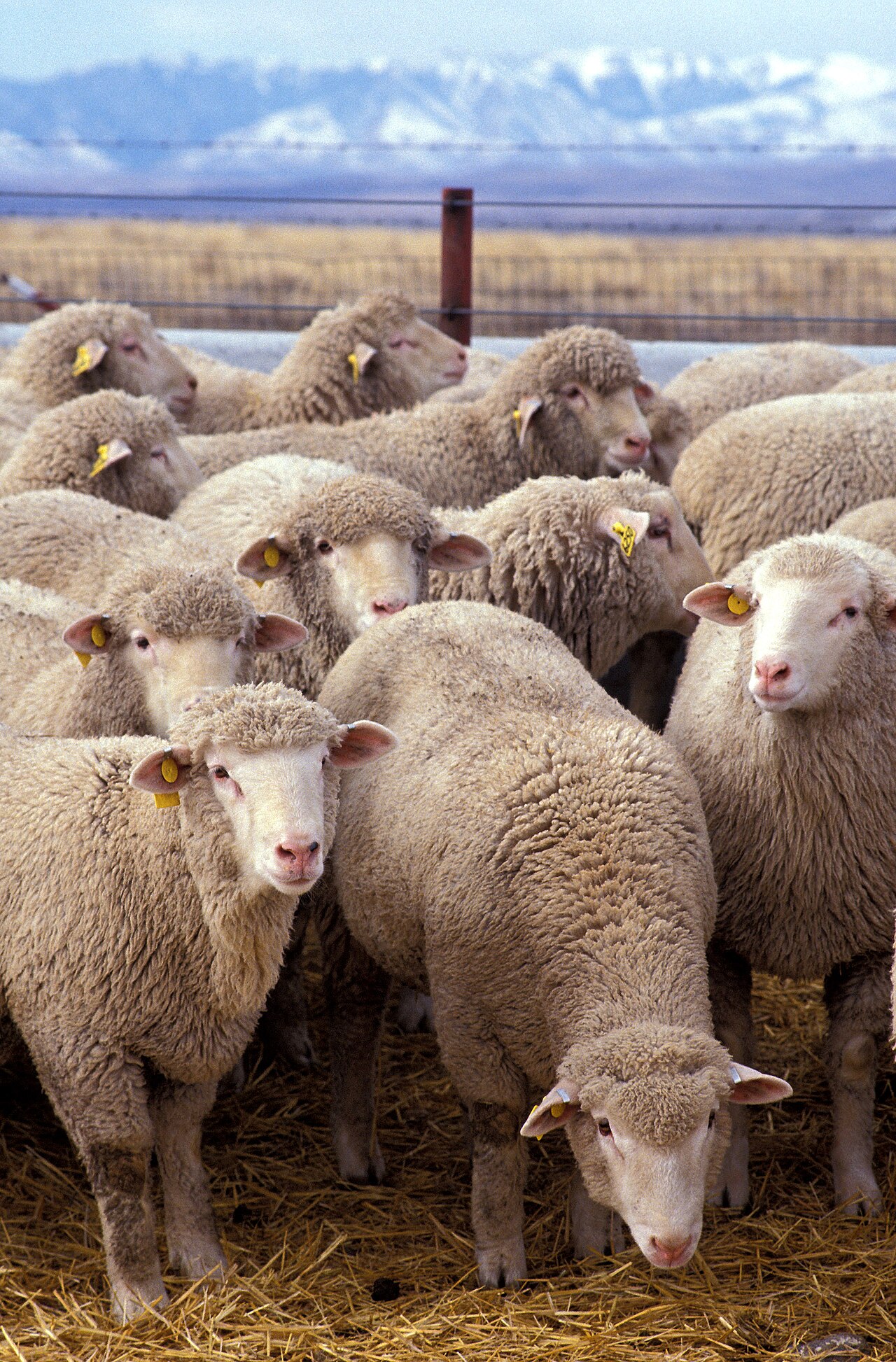
Dotted across windswept uplands and undulating pastoral grasslands, the domestic sheep (Ovis aries) represents one of the earliest biological triumphs of human pastoralism. Domesticated from the wild mouflon (Ovis orientalis) approximately eleven thousand years ago in ancient Mesopotamia, ovine husbandry formed the economic bedrock of early trade, textile manufacturing, and rural transhumance. Through deliberate selective breeding, diverse breeds—from the ultra-fine fleece of the Merino to the hardy meat and milk breeds like the Suffolk and East Friesian—were engineered to thrive across rocky alpine meadows, arid steppes, and lush coastal pastures where conventional cultivation was impossible.
The physical fleece of the sheep constitutes an evolutionary masterpiece of mammalian thermal regulation. The ovine pelage consists of thousands of crimped keratin fibers that trap an insulating microclimate of ambient air against the dermis, mitigating extreme temperature swings. Sebaceous glands secrete lanolin, a complex wax ester and fatty acid lipid matrix that coats the wool shaft, imparting near-total hydrophobicity against rain while inhibiting microbial skin infections. Annual shearing conducted during late spring relieves the animal of thermal burden prior to summer heat, yielding dense textile fleeces without disrupting dermal integrity or inducing systemic distress.
As specialized small ruminants, sheep possess a digestive physiology optimized for highly selective, fine-scale botanical foraging. Their split upper lip and nimble incisors enable them to graze closer to the soil surface than cattle, consuming low-growing herbs, leguminous forbs, and thorny scrub. Within the ovine rumen, microbial fermentation breaks down structural hemicellulose into volatile fatty acids that sustain high energy demands. In addition, their cloven hooves gently tamp the ground without causing severe soil compaction, facilitating rain penetration and promoting healthy seed germination across open slopes. This selective grazing behavior renders sheep invaluable agents of conservation grazing, as their systematic foraging prevents woody scrub encroachment, suppresses invasive weeds, and maintains the floristic diversity of sensitive calcareous grasslands and heathlands.
Ethologically, the domestic sheep is defined by extreme gregariousness and synchronized social coordination. Possessing horizontally elongated rectangular pupils, sheep enjoy an extraordinary panoramic visual field exceeding two hundred and seventy degrees, allowing vigilance for terrestrial predators without lifting their heads from forage. When confronted with unfamiliar stimuli, intense flocking instincts cause individuals to condense into tightly unified formations, a defensive adaptation designed to confuse predators. Far from being cognitively deficient, neuroethological research confirms that sheep possess sophisticated facial recognition circuitry in the temporal cortex, enabling them to distinguish and remember over fifty individual sheep and human faces for years. This acute socio-spatial intelligence facilitates complex flock coordination and enduring kinship bonds.
Maternal behavior in ewes is governed by precise neuroendocrine imprinting during the sensitive post-parturient period. Following lambing, surging levels of oxytocin induce rigorous olfactory imprinting as the ewe obsessively licks amniotic fluid from the neonate, establishing a non-receptive barrier to foreign lambs within hours. Individual vocal acoustics, characterized by distinct low-frequency bleats, enable immediate acoustic recognition across noisy hillsides. In pastoral systems, trained working dogs collaborate seamlessly with shepherds, utilizing the sheep's innate spatial flight zones to steer entire flocks across treacherous terrain without causing injury or panic.
Ultimately, ovine stewardship epitomizes a sustainable, symbiotic relationship between rural civilization and pastoral ecologies. By converting marginal, uncultivable vegetation into warm textiles, artisan dairy products, and enriched soil microbiomes through organic manure distribution, sheep bridge the gap between rough wilderness and agricultural utility. The serene image of an alpine flock grazing peacefully against a sunset horizon celebrates an ancient pastoral rhythm, honoring an enduring partnership that continues to shape our cultural heritage and natural landscapes. Through rotational grazing and attentive flock stewardship, sheep farming models an enduring synergy between traditional pastoral craftsmanship and modern ecological conservation, preserving rural vibrancy across diverse bioregions.























































